Question: I really should own a multimeter

That’s about what I figured. Mainly I got these old pickups laying around and some of em aren’t labled bridge or neck.
 
If you’re working purely on guitars, I think that’s completely unnecessary.

Maybe if you are doing lots of work on setting up permanent sound systems at venues, yeah.

Or possibly amplifiers, which I know little about.
 
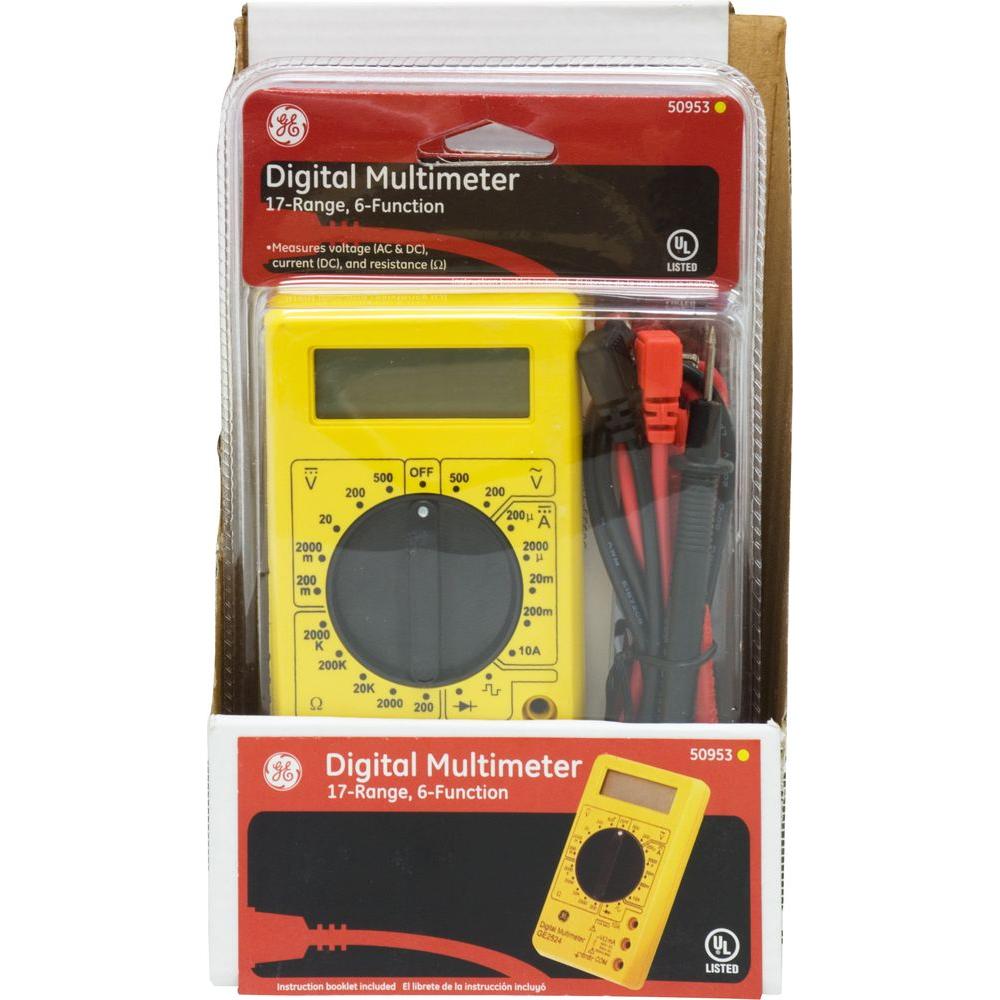
I have a cheap GE one I got at Home Depot years ago. It does everything I need for guitar repair. It was like 10 bucks, but it seems they now are 15 bucks (inflation, I suppose)

power-gear-multimeters-50953-c3_1000.jpg
 
Harbor Freight has many low cost options.
63604_I.jpg
I have one of those. They occasionally have them as a "free with purchase" coupon option. The meter itself is actually OK, but the leads are crap. They'll work...for a while...until they pull out of either the probe side or plug side. If you get another set of leads, it's a fine hobbyist meter.
 
Just buy a Fluke.

Yeah, they cost 10x what one from chinesecrap.com will run you, but it's worth it.

I like quality tools that are built to last, do what they are supposed to, etc.


But yeah, a cheap ohm meter is really all you need for guitar stuff 98% of the time.
 
I still have my Radio Shack multimeter from 30 years ago. I bought it for a college circuits class I was taking. I use it about once per year. I like the needle type just because I am comfortable with it. I sometimes feel (and I could be wrong) that the needle twitches there may be something there. I think a digital meter would filter that out.

I use an Extech brand digital multimeter at work. It is 20 years old. I use it more for data logging temperatures.

I've never needed one for my guitars. Maybe some day. :shrug:
 
Just buy a Fluke.

Yeah, they cost 10x what one from chinesecrap.com will run you, but it's worth it.

I like quality tools that are built to last, do what they are supposed to, etc.


But yeah, a cheap ohm meter is really all you need for guitar stuff 98% of the time.
The Fluke is my go-to. They are expensive, but are also quality instruments.

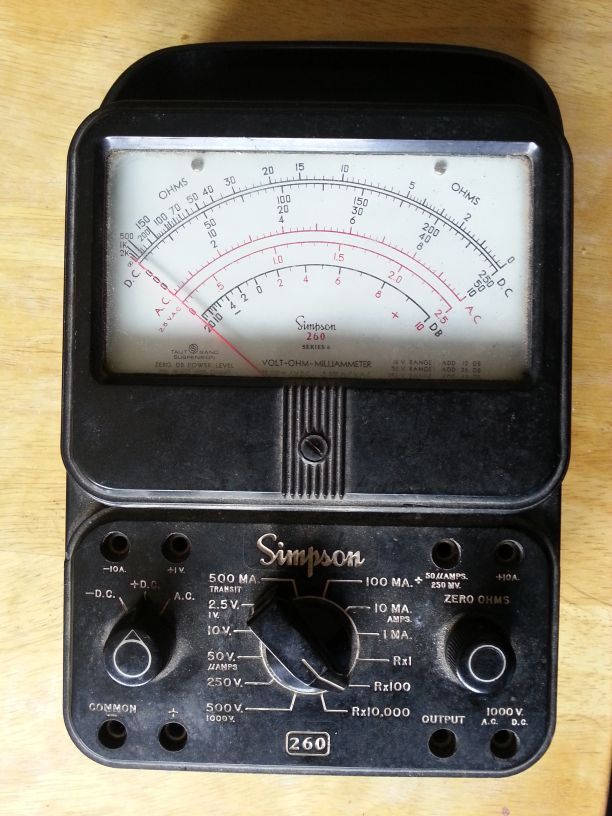
Another option is yard sales or auctions. Definitely hit or miss, but I picked up this Simpson for $3 at a yard sale in my neighborhood a while back. Not exactly pocket-sized, but handy if I ever want to measure something in the 1000V range. :messedup:

Simpson260-6_zpsea6703d1.jpg
 
The Fluke is my go-to. They are expensive, but are also quality instruments.

Another option is yard sales or auctions. Definitely hit or miss, but I picked up this Simpson for $3 at a yard sale in my neighborhood a while back. Not exactly pocket-sized.

Simpson260-6_zpsea6703d1.jpg

I used to have one of those. They work, but are also why I bought a Fluke. I like auto range and audible continuity.
 
I used to have one of those. They work, but are also why I bought a Fluke. I like auto range and audible continuity.
Agreed. The Fluke also runs on a single 9V battery. That Simpson takes 4 (I think) C-cells along with the 9V. I rarely use it, but there are times where the analog meter can show fluctuations that are hard to see on a digital meter...albeit few and far between.
 
The past couple months they have been giving one away w/ $20 purchase and coupon at Harbor Freight. I snagged one as a spare for my Fluke.
 
Agreed. The Fluke also runs on a single 9V battery. That Simpson takes 4 (I think) C-cells along with the 9V. I rarely use it, but there are times where the analog meter can show fluctuations that are hard to see on a digital meter...albeit few and far between.

An analog meter is invaluable when checking start and run motor capacitors.

When your central air dies in the middle of the summer, and it's 100 degrees outside, you'll be very glad you can diagnose failed motor caps yourself. Trust me.
 
Back
Top